The Same Crack Means Three Different Things in Georgetown
August 13, 2026
August 13, 2026
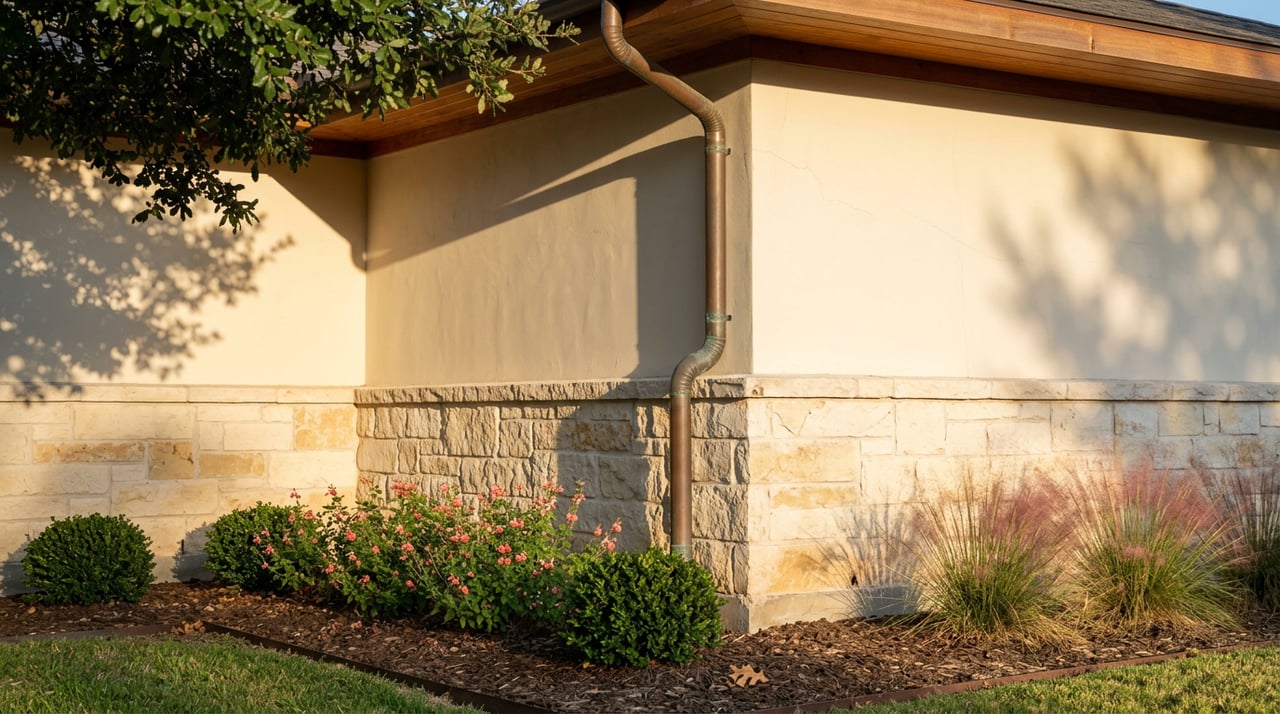
Three option periods closed in Georgetown last month with the same line on the inspection report: a door that sticks near the frame, paired with a hairline crack running up from the corner. One house sat two blocks off Austin Avenue in a home built before 1940. One sat in Teravista, poured in the early 2000s. One sat off 9th Street near the San Gabriel River. The inspector wrote nearly identical language on all three reports. What that sentence actually meant, and what it should have cost each buyer in repairs or negotiating room, was not the same at all.
That gap is the thing worth understanding before you write an offer or accept one in this city. Georgetown does not sit on one kind of ground, and a foundation finding that reads as routine seasonal movement in one neighborhood can point to a wood-rot problem or a chronic moisture issue somewhere else. The inspection language stays generic. The diagnosis, the fix, and the price tag do not.
Williamson County sits where the Edwards Plateau's limestone gives way to the Blackland Prairie's clay, and Georgetown straddles that line. East of I-35, in subdivisions like Teravista and Georgetown Village, homes sit on Taylor Black Clay and Houston Black Clay, soils capable of swelling well into double-digit percentages of their volume when saturated and shrinking hard when the ground dries out. Downtown, around Courthouse Square and Austin Avenue, the story is different. Homes built in the 1890s through the 1940s often sit on a shallow limestone shelf with clay pockets layered unevenly on top, which creates differential pressure patterns you don't see in a subdivision poured on uniform clay. Along the San Gabriel River corridor, including the neighborhoods near Rivery Park and River Ridge, the dominant issue isn't soil chemistry at all. It's water table. After a significant rain event, groundwater in that corridor can rise to within 18 to 36 inches of the surface, which keeps crawl spaces humid for weeks at a time.
Three known events have stress-tested all three of these zones. The 2011 drought is still treated as the benchmark bad year for foundation movement across Central Texas. The 2015 Memorial Day floods dropped more than 11 inches of rain on parts of Williamson County in 48 hours, saturating soil fast enough to cause heaving in multiple neighborhoods. Winter Storm Uri in February 2021 froze ground at depths Central Texas rarely sees, and the resulting frost heave showed up in Sun City and Wolf Ranch, areas that don't usually plan for that kind of cold. Each event hit the city's different ground differently, which is exactly the point. A one-size explanation of "expansive clay causes problems" misses how unevenly that risk is actually distributed.
| Location profile | Typical foundation | Dominant failure mode | Typical repair range |
|---|---|---|---|
| Historic Downtown (Courthouse Square, Austin Avenue) | Pier and beam, limestone or rubble stone, built 1870s to 1940s | Untreated wood posts set directly in soil, wood rot, shallow piers (2 to 4 feet) losing support as the clay's active zone extends 8 to 15 feet deep in drought years | $300 to $800 per pier for spot repair, $4,000 to $15,000 for full pier-and-beam restoration, plus 10 to 20 percent more where historic masonry requires specialized handling |
| Established slab subdivisions (Teravista, Georgetown Village, early-phase Sun City) | Slab-on-grade, built 1990s through mid-2000s | Cumulative differential settlement from repeated clay shrink-swell cycles, now compounding at 20 to 30 years of age | $2,800 to $10,000, typically requiring 8 to 15 piers for a full repair |
| River corridor (Rivery Park, River Ridge, near 9th Street) | Mixed slab and pier and beam | Chronic crawl space humidity from a seasonally high water table, independent of the clay cycle affecting the rest of the city | Repair costs vary with the extent of moisture damage, and often require added drainage work alongside structural repair |
The pattern that matters here isn't the dollar figures on their own. It's that the same visible symptom, a door that sticks, sends you down three completely different repair paths depending on which of these zones the house sits in. A pier and beam home downtown with a sticking door is telling you about a wood post, not a slab. A slab home in Teravista is telling you about clay cycling that has had two extra decades to compound. A home near the river is sometimes telling you about humidity that has nothing to do with soil movement at all.
That distinction changes what you ask the inspector to look at next, and it changes what a reasonable repair credit looks like at the negotiating table.
Homeowners routinely assume a homeowners insurance policy will step in if a foundation problem gets expensive. It generally will not. Standard policies in Texas do not cover foundation damage caused by gradual soil movement or ordinary settlement, which covers most of what shows up on a Georgetown inspection report. Coverage typically applies only when the damage traces back to a sudden, covered event, like a burst pipe, not to the slow work of clay expanding and contracting over years.
That distinction matters most for buyers weighing whether a repair estimate is a deal breaker or a negotiating point. If the fix is covered by insurance, the calculation is different than if it's coming entirely out of pocket, and in Georgetown, it almost always will.
None of these questions require you to become a soils expert. They require knowing which of the three stories above applies to the house in front of you, then asking the inspector to confirm it rather than accepting a generic write-up.
Georgetown homes took an average of 96 days to sell in March 2026, up from 81 days the year before. That slower pace matters here beyond the general talk of a buyer's market. It means a buyer who finds a foundation-related item on an inspection report has more room than they did a year or two ago to ask for a repair credit, request a follow-up engineer's report, or walk away entirely without losing the house to a backup offer the next morning. A finding that would have been waved through during a faster market is now a legitimate item to negotiate, and knowing which of Georgetown's three ground profiles you're dealing with is what turns that negotiation from a guess into a specific ask.
Does every home in Georgetown need a specialized foundation inspection, or is a general home inspection enough? A general inspector will flag visible signs like cracks and sticking doors, but elevation mapping, crawl space moisture assessment, and wood rot evaluation typically require a separate, more focused inspection, especially for pier and beam homes downtown or slab homes now old enough to show cumulative movement.
Is a hairline crack always something to worry about? Not necessarily. Georgetown's clay cycles create seasonal cracking that can look alarming and mean very little. What matters is whether the crack is widening, running diagonally from a door or window corner, or paired with other symptoms like sloping floors, which points toward something worth a closer look rather than routine settling.
Do newer homes in Georgetown avoid these issues entirely? No. Newer construction in areas like Wolf Ranch sits on moderately expansive clay too, and even well-built modern slabs are not immune to shrink-swell cycles over time. The building era changes the likely repair method, not whether the ground underneath is a factor.
Reading a Georgetown inspection report well means reading the address first. The soil under Courthouse Square, the clay under Teravista, and the water table near the San Gabriel River are not the same problem wearing different words. If you're weighing an offer, a repair credit, or a listing price around a foundation finding anywhere in Georgetown, Oak & Willow Realty Group can walk through what a specific finding means for a specific address before you have to decide. Get a Free Home Valuation to start that conversation with real numbers in hand.
Stay up to date on the latest real estate trends.
Experience a real estate partnership built on trust, expertise, and genuine care. We bring a lifelong understanding of what “home” truly means to every client and every decision.
Oak & Willow Realty Group
Mary Ann: (512) 937-9063
Kara: (512) 818-8132
[email protected]
Address
4909 Williams Dr
Georgetown, TX 78633