In Liberty Hill, the Word "Warranty" Doesn't Mean What It Used To
September 3, 2026
September 3, 2026
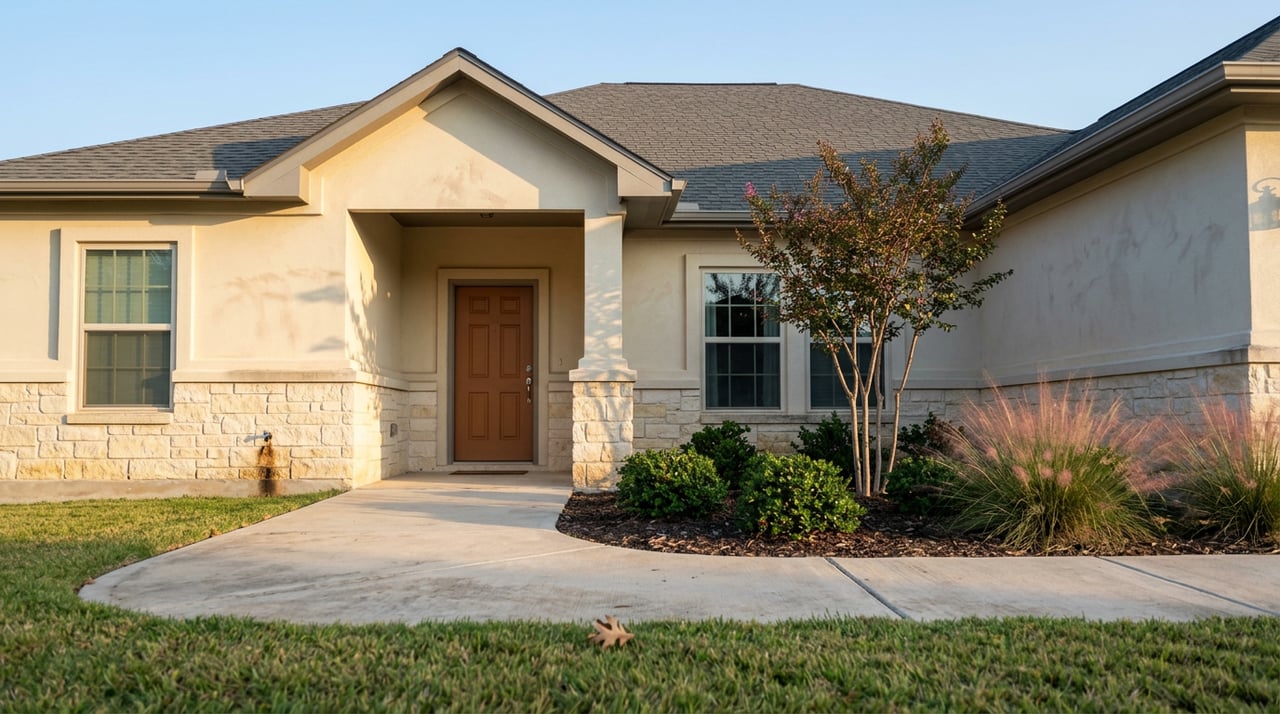
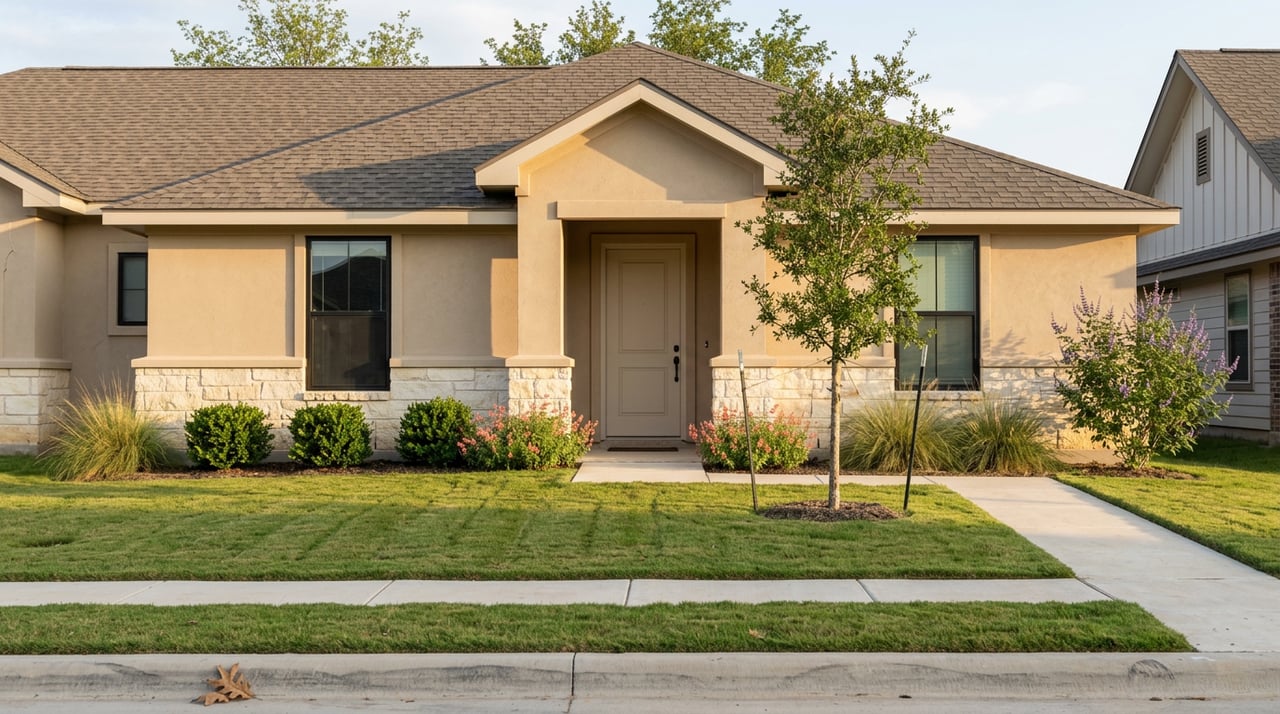
Two buyers sign contracts in the same week, in the same Liberty Hill subdivision, for houses that will look nearly identical from the street. One builds with Highland Homes. The other builds with Chesmar. Both sales offices talk about their warranty as a selling point, the same way granite counters or a three-car garage get mentioned. Neither buyer asks to see the actual warranty document before signing, because why would they. A warranty is a warranty.
Except in Texas, since 2023, it isn't. A state law changed how long a builder can actually be held responsible for a structural defect, and the change hinges on paperwork most buyers never read closely enough to notice the difference.
For decades, Texas builders operated under a straightforward rule. If something went structurally wrong with your house, you had ten years from substantial completion to bring a claim, no matter what your builder's sales brochure said about warranty coverage. That ten-year window is called the statute of repose, and it functioned as a backstop. Marketing copy could promise whatever it wanted. The law set the real deadline.
That backstop is still the default. But it is no longer the only option available to builders.
House Bill 2024 passed the Texas Legislature and took effect on June 9, 2023. It created an exception to that ten-year statute of repose. If a builder provides a written warranty that meets three specific minimums, the legal window for structural claims shrinks from ten years to six.
Those minimums are exact: one year of coverage on workmanship and materials, two years on plumbing, electrical, and HVAC delivery systems, and six years on major structural components. Meet all three, in writing, and the builder's exposure closes four years earlier than it would have under the old default.
There's a wrinkle worth knowing. If a homeowner reports a defect in writing before that six-year window closes, the deadline for that specific claim can extend by one additional year. So the honest floor is six years, with a possible seventh if you paper the trail correctly and report early.
The exception only applies to detached one- and two-family homes and townhomes up to three stories, which describes almost everything being built in Liberty Hill's new subdivisions right now.
Here's where it gets counterintuitive. A builder who wants to shorten their own legal exposure has to earn that shorter window by handing you a more explicit, more generous-sounding warranty document. The builder who says nothing, or hands you a thin one-page disclaimer that doesn't hit all three tiers, hasn't earned the exception. That buyer, by default, still falls under the old ten-year rule.
In other words: the builder whose warranty language sounds the most reassuring at the sales table may be the one who has structured the smallest legal window for you. The builder who seems less polished on warranty talk may have accidentally left you with more time.
This isn't a reason to avoid builders with strong written warranties. A six-year structural warranty that's actually documented and enforceable is worth more in practice than a vague ten-year promise with no qualifying paperwork behind it, because an unenforceable promise doesn't help you when something cracks. The point is narrower and more useful: you cannot tell which situation you're in by listening to a sales pitch. You can only tell by reading the document.
| Coverage tier | Minimum required for the 6-year exception | What it actually covers |
|---|---|---|
| Workmanship and materials | 1 year | General construction quality, finish work |
| Distribution systems | 2 years | Plumbing, electrical, HVAC |
| Major structural components | 6 years | Foundation, load-bearing walls, framing |
If a builder's document is missing one of these three tiers, the whole exception likely doesn't apply, and the older ten-year window is probably still in force. That's a meaningful distinction to confirm before you sign, not after.
Liberty Hill isn't a market where this comes up occasionally. It's a market built almost entirely on new construction right now. Lariat, the master-planned community tucked between the north and south forks of the San Gabriel River off County Road 214, has builders including Chesmar Homes, Highland Homes, Perry Homes, Ashton Woods, Coventry Homes, Tri Pointe Homes, Westin Homes, Drees Custom Homes, and Landsea Homes all actively selling within the same development. Each of those companies writes its own warranty contract. None of them are required to use identical language.
Liberty Hill ISD is expanding alongside all of this building, adding an eighth elementary campus in 2026, and Lariat's own site plan sets aside land for an on-site school. Families choosing between builders in that community are already comparing floor plans, lot premiums, and closing timelines. The warranty document deserves the same scrutiny, and it's the one piece of paper that rarely gets read before the ink dries.
Because the workmanship tier closes after one year and the mechanical systems tier closes after two, waiting until something breaks is a bad strategy. A tighter inspection schedule protects you inside every tier:
Each of these typically runs a few hundred dollars in the Austin area. Against a structural claim that can run into the tens of thousands, that's a small premium for documentation you may need later.
One more gap catches new-construction buyers off guard. Builder warranties in Texas typically stop at the house itself. Refrigerators, ranges, dishwashers, and washer-dryer sets usually fall under the manufacturer's own warranty instead, which commonly runs twelve months and covers parts but not labor. If you're weighing a third-party home warranty on top of your builder's coverage, appliance protection is usually the only piece worth paying for in years one and two, since the structural and systems tiers are already spoken for.
Request the actual warranty document, not a summary, before you're at the closing table. Confirm it explicitly states the one-year, two-year, and six-year tiers. If it doesn't, ask whether the builder is relying on the older ten-year statute of repose instead, and get that answer in writing too. Save every inspection report and every written notice you send about a defect, since documentation is what turns a possible seventh year of protection into an actual one.
Does this apply to resale homes in Liberty Hill, not just new construction? No. The shortened statute of repose only applies to the original builder's liability on a home they constructed. A resale purchase doesn't reset that clock, and the original completion date still governs.
If my builder doesn't mention HB 2024, does that mean I'm not covered by it? It likely means the older ten-year statute of repose still applies to your home, since the shorter window is only available to builders who provide the qualifying warranty in writing. Ask directly rather than assuming either way.
Is a six-year warranty worse than a ten-year one? Not automatically. A documented six-year warranty that meets the legal minimums is enforceable. A ten-year promise with no qualifying paperwork behind it may be harder to act on. The number matters less than whether it's actually in writing.
Choosing a builder in a market as active as Liberty Hill means comparing floor plans, lots, and price sheets side by side. It should also mean comparing warranty paperwork with the same care, because two houses that look identical from the curb can carry very different clocks. If you're weighing builders in Lariat or anywhere else in Liberty Hill and want a second set of eyes on what's actually in the contract, Oak & Willow Realty Group is glad to walk through it with you before you sign anything.
Stay up to date on the latest real estate trends.
Experience a real estate partnership built on trust, expertise, and genuine care. We bring a lifelong understanding of what “home” truly means to every client and every decision.
Oak & Willow Realty Group
Mary Ann: (512) 937-9063
Kara: (512) 818-8132
[email protected]
Address
4909 Williams Dr
Georgetown, TX 78633