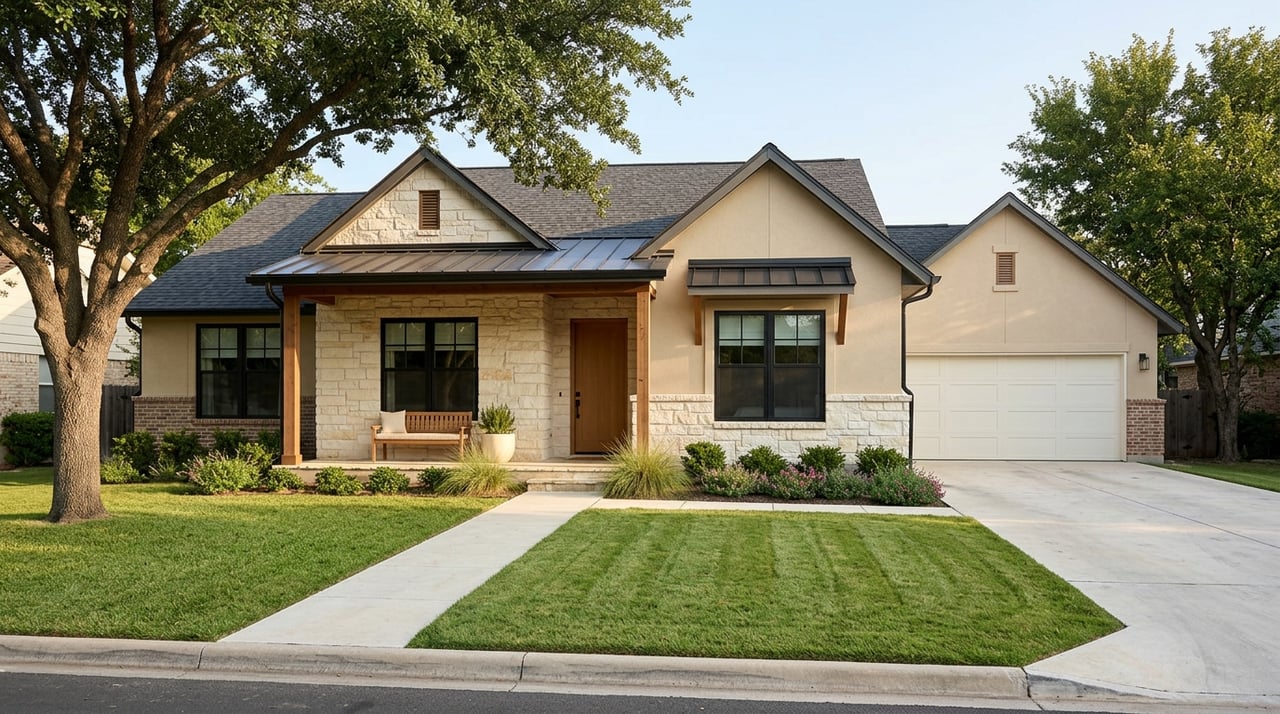
Liberty Hill Or Georgetown: How To Choose Your Next Address
June 11, 2026
June 11, 2026
Trying to choose between Liberty Hill and Georgetown can feel harder than it should. Both cities sit in the same general orbit north of Austin, but they offer very different day-to-day experiences once you look past the map. If you want a clearer way to compare pace, housing patterns, downtown feel, and commute routes, this guide will help you sort out which address may fit you best. Let’s dive in.
Before you compare square footage or lot size, think about how you want everyday life to feel. The biggest difference between Liberty Hill and Georgetown is not just price or geography. It is the rhythm of the community around you.
Liberty Hill is best understood as a smaller, growth-oriented community that is still actively shaping what comes next. The city’s downtown planning work focuses on land use, transportation, housing, public space, historic preservation, and sustainability, which points to a place that is growing with intention.
Georgetown feels more established in its downtown identity. City materials describe a 40-block cultural district centered on the historic square, with more than 100 restaurants, wineries, shops, and galleries, along with major events and cultural venues. In practical terms, that means Georgetown already functions as a larger destination for dining, shopping, and civic activity.
If you picture a more compact downtown with local businesses and a community-scale atmosphere, Liberty Hill may feel like a natural fit. The city describes its local scene as an array of restaurants and unique boutiques, with offerings that are still growing and changing frequently.
Liberty Hill is also investing in walkability and public space. The downtown shared-use path runs from the Water Tower parking lot along Loop 332 by Foundation Park to Highway 29, and downtown planning efforts continue to focus on preserving the city’s historic hometown feel while improving parking, walkability, and public spaces.
If you want more built-in activity, Georgetown offers a different experience. Its downtown is described by the city as a vibrant destination area with restaurants, retail, entertainment venues, and a well-known historic square at the center of city life.
For many buyers, this comes down to preference. If you enjoy having more dining and shopping options close by, Georgetown has the stronger downtown amenity base. If you prefer a smaller and more local-feeling setting, Liberty Hill may feel more comfortable.
One of the clearest structural differences shows up in Liberty Hill’s zoning standards. Published minimum lot sizes include 120,000 square feet for Agricultural lots, 30,000 square feet for Low Density Residential, 6,500 square feet for Medium Density Residential, and 4,400 square feet for High Density Residential.
That range tells you two important things. First, Liberty Hill includes opportunities for larger-lot living. Second, the city also has a formal path for more compact residential development as it grows.
Georgetown’s public zoning map shows a wider mix of residential categories, including Residential Estate, Residential Low-Density, Residential Single-Family, Two-Family, Townhouse, Low-Density Multi-family, High-Density Multi-family, Manufactured Housing, and Mixed-Use Downtown, along with overlays and planned development areas.
That suggests Georgetown’s housing choices can vary more from one area to another. Depending on the neighborhood, you may find estate-style settings, more compact infill, townhomes, multifamily options, or mixed-use environments.
This is often where the decision gets more practical. If you are hoping for more yard space, more separation between homes, or a setting that feels closer to the growth edge, Liberty Hill often deserves a serious look first.
If you want more housing formats and more neighborhood-to-neighborhood variety, Georgetown may offer a better match. Its broader zoning vocabulary points to more layered housing choices across the city.
Neither option is automatically better. It depends on whether you are prioritizing room to spread out or access to a wider mix of home types and everyday conveniences.
Liberty Hill is about 35 miles north of downtown Austin and about 18 miles from Georgetown. The city directs drivers to use US 183 north to Highway 29, and TxDOT is studying the US 183 corridor through Liberty Hill because traffic demand and congestion are increasing.
That means Liberty Hill’s commute story is shaped largely by US 183 and SH 29. If your routine depends on north-south travel toward Austin-area job centers, those routes will likely define much of your day.
Georgetown is approximately 26 miles north of downtown Austin. It sits on Interstate 35 at the intersection of State Highway 130, giving it a different regional access pattern than Liberty Hill.
For buyers who want direct ties to major regional corridors, Georgetown often feels more straightforward from a road-access standpoint. The city’s location along I-35 and SH 130 creates a different commute profile than Liberty Hill’s 183-focused route network.
Liberty Hill’s appeal is often tied to its smaller commercial core and its community-centered events. City pages highlight restaurants, boutiques, festivals, food, shopping, live music, and pedestrian-friendly touches like free pedicab rides during downtown events.
That can appeal to buyers who want local activity without the scale of a larger destination downtown. The lifestyle here leans more intimate than expansive.
Georgetown’s city guide highlights more than 1,000 acres of parkland, more than 50 parks, five pools, and a growing trail system. It also points to Lake Georgetown, Garey Park, and downtown as major lifestyle assets.
If parks, recreation, and a broader set of established amenities are high on your list, Georgetown has a deeper bench. For many buyers, that means more options for weekends, errands, dining out, and outdoor time close to home.
If you are still torn, try narrowing your choice to the factor that will shape your week the most. In most cases, your best fit comes down to the tradeoff between space, convenience, and pace.
Here is a simple way to think about it:
Before you pick one city over the other, ask yourself a few honest questions. Your answers can usually point you in the right direction faster than a long list of features.
If you can answer those clearly, your next address often becomes much easier to spot.
Choosing between Liberty Hill and Georgetown is really about choosing how you want your days to work. One offers a smaller, more growth-edge feel with notable larger-lot opportunities, while the other offers a more established downtown, broader housing variety, and a larger amenity base. If you want help narrowing the choice based on your commute, lifestyle goals, or must-have home features, Oak & Willow Realty Group would love to help you explore both with clarity and confidence.
Stay up to date on the latest real estate trends.
Experience a real estate partnership built on trust, expertise, and genuine care. We bring a lifelong understanding of what “home” truly means to every client and every decision.
Oak & Willow Realty Group
Mary Ann: (512) 937-9063
Kara: (512) 818-8132
[email protected]
Address
4909 Williams Dr
Georgetown, TX 78633