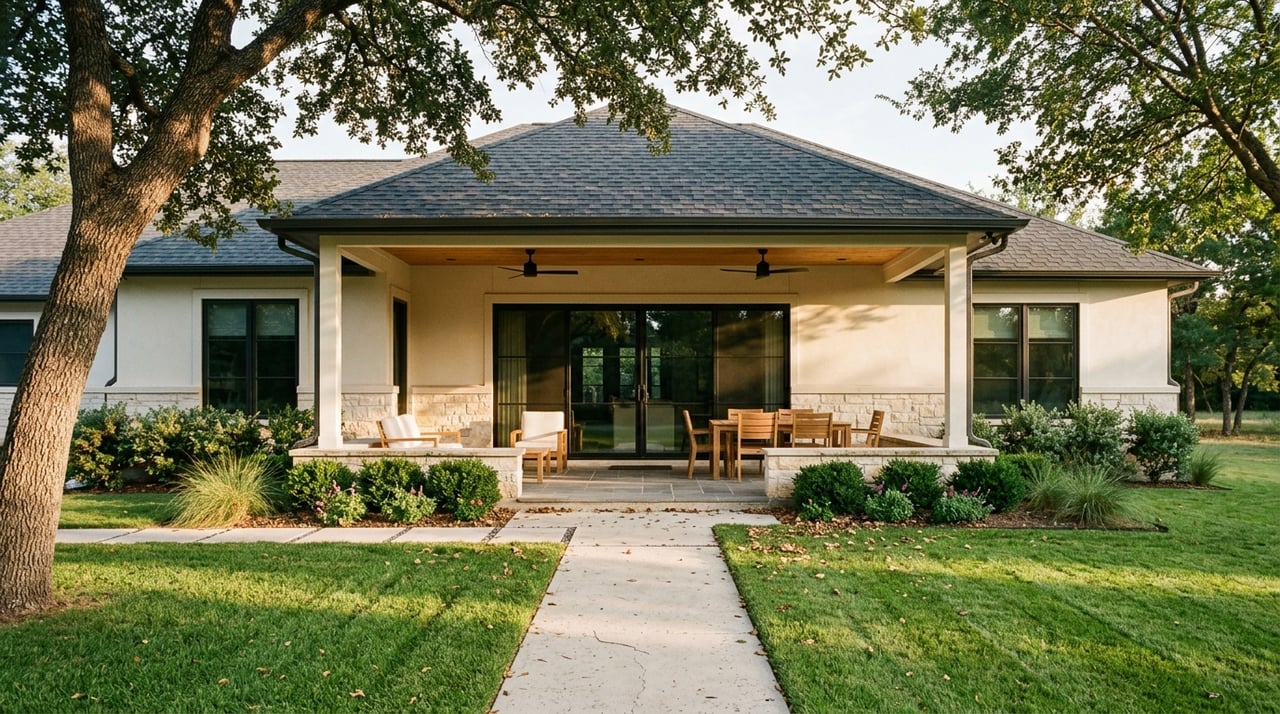
Is Liberty Hill The Right Hill Country Fit For You?
June 4, 2026
June 4, 2026
Wondering whether Liberty Hill gives you the right mix of space, scenery, and convenience? If you are comparing Greater Austin communities, this small but fast-growing city can feel especially appealing because it offers a Hill Country setting with a distinctly local rhythm. Below, you will get a clear look at what daily life, housing, commuting, and community feel like in Liberty Hill so you can decide whether it fits the way you want to live. Let’s dive in.
Liberty Hill is a small city in physical size, covering about 4.63 square miles, but its growth has been striking. Census estimates show the population rose from 3,646 in April 2020 to 13,317 in July 2025. That kind of change tells you Liberty Hill is no longer a hidden corner of Williamson County.
Even with that growth, Liberty Hill still presents itself as a place with a strong small-town identity. The city sits between the North and South forks of the San Gabriel River, and local descriptions point to rolling hills, ranching roots, and a setting shaped by Central Texas landscape. If you want a place that feels less urban and more grounded in Hill Country character, that matters.
If Liberty Hill is the right fit for you, it will likely be because of the way everyday life feels, not just because of square footage or price. The town leans into a local, community-centered lifestyle with a compact downtown, local businesses, parks, and annual events that give the calendar some rhythm.
The Liberty Hill Chamber highlights local shops, coffee spots, restaurants, parks, art, and small retail. Community features include places like the International Sculpture Park, Veterans Memorial Park, Wetzel Park Splash Pad, Liberty Hill City Park & Swim Center, and River Ranch County Park. In practical terms, that means your weekends can feel simple and close to home.
The city also hosts recurring events such as Whimsy & Wonder, the Independence Day Spectacular, the Christmas Festival, the Liberty Hill Fair & Rodeo, the Sculpture Festival, and Veterans Day activities. For many buyers, that event calendar helps a town feel lived-in rather than newly built. It gives you more chances to settle into the local pace of life.
One of Liberty Hill’s clearest lifestyle traits is space. Local planning documents describe single-family housing as the most predominant and active land use, and they note there is currently very little multi-family housing in the city. In other words, Liberty Hill is still largely a detached-home market.
That matters if you are hoping for a home with a yard, more separation from neighbors, or a less dense setting. The city’s planning framework also shows that single-family residential is proposed in nearly all parts of the city, reinforcing the idea that Liberty Hill is built first for that kind of living.
If you picture acreage, Liberty Hill may also stay on your shortlist. Current land listings include lots from around half an acre to well over 10 acres, with examples around 1, 2, 5, 10, and 13 acres. That does not mean every home comes with land, but it does show Liberty Hill still has a visible country edge beyond the more compact core.
Liberty Hill’s housing market reflects its growth and its appeal to buyers looking for a suburban Hill Country lifestyle. Zillow’s February 2026 data puts the average home value at $490,457 and the median sale price at $495,150. The Census Bureau’s 2020 to 2024 ACS reports a median value of owner-occupied homes at $403,200.
These numbers measure different things, so they should not be treated as exact equivalents. Still, together they suggest a market with solid price support and steady buyer interest. If you are considering Liberty Hill, it helps to think of it as a community where you may be paying for a blend of space, newer housing options, and lifestyle appeal.
Liberty Hill can make sense for several types of buyers, especially if your priorities line up with the area’s strengths. It often stands out for people who want more room and a quieter day-to-day setting while staying connected to the Greater Austin region.
You may want to take a closer look at Liberty Hill if you are looking for:
It may be especially appealing if you are relocating and want a community that feels more relaxed than a denser suburb. It can also work well if you are moving up in home size and want more breathing room without giving up access to nearby cities.
Liberty Hill works best when you are comfortable with a car-oriented lifestyle. The city is about 35 miles north of downtown Austin, about 8 miles from Leander, 15 miles from Cedar Park, and 18 miles from Georgetown. Major connections include SH 29, US 183, and the SH 29 and US 183 junction at Seward Junction.
That road network helps explain why Liberty Hill attracts buyers who want more house and land while staying tied to the wider metro. It is connected, but it is not set up like a walkable urban center. Census QuickFacts reports a mean travel time to work of 34.1 minutes for workers age 16 and over, which supports the idea that many residents accept a longer drive in exchange for lifestyle tradeoffs.
If you love quick, dense, city-style convenience, Liberty Hill may feel too far out. If you are happy to drive for work, shopping, or entertainment in return for a more spacious home environment, the trade may feel worth it.
A smaller-town setting does not mean Liberty Hill feels cut off. The city notes that residents have access to health-care services, urgent care, and 24-hour EMS, and that St. David’s Emergency Center in Leander is less than 10 minutes away. That can be reassuring if you want a quieter setting but still care about practical day-to-day access.
The city also points to community resources like the public library, which has more than 15,000 books and hosts weekly story time and summer reading programs. Those details may seem small, but they help paint a fuller picture of how the town functions. Liberty Hill feels local and community-oriented rather than isolated.
Liberty Hill is not best described as a highly walkable place. Most errands and commuting patterns are still centered around driving, which is typical for a growing Hill Country suburb. That is an important expectation to set if walkability is high on your list.
Still, there are signs of everyday public spaces taking shape. The city’s Downtown Shared-Use Path is a 10-foot pedestrian and bike route that runs from the downtown Water Tower Parking Lot along Loop 332 by Foundation Park and ends at Highway 29. While that does not make Liberty Hill urban, it does add a bit more flexibility to how people move around the downtown area.
Liberty Hill may be the right Hill Country fit if you want a home-first lifestyle centered on space, scenery, and a strong local identity. It offers a small-town feel, a housing stock that still leans heavily toward single-family homes, and access to parks, events, and local businesses that support a steady everyday rhythm.
It may be less ideal if your top priorities are short commutes, dense retail access, or an urban street-by-street lifestyle. In that case, another Greater Austin location may align more closely with what you want. The key is to weigh what matters most to you: proximity and pace, or room and setting.
If you are trying to sort through Liberty Hill, Georgetown, Leander, or another nearby area, it helps to compare them through the lens of your real life. The right choice is not just about the house. It is about how you want your days to feel once you are there.
If you want help comparing Liberty Hill with other nearby communities or finding the right property for your next move, Oak & Willow Realty Group can guide you with local insight and a calm, thoughtful approach.
Stay up to date on the latest real estate trends.
Experience a real estate partnership built on trust, expertise, and genuine care. We bring a lifelong understanding of what “home” truly means to every client and every decision.
Oak & Willow Realty Group
Mary Ann: (512) 937-9063
Kara: (512) 818-8132
[email protected]
Address
4909 Williams Dr
Georgetown, TX 78633