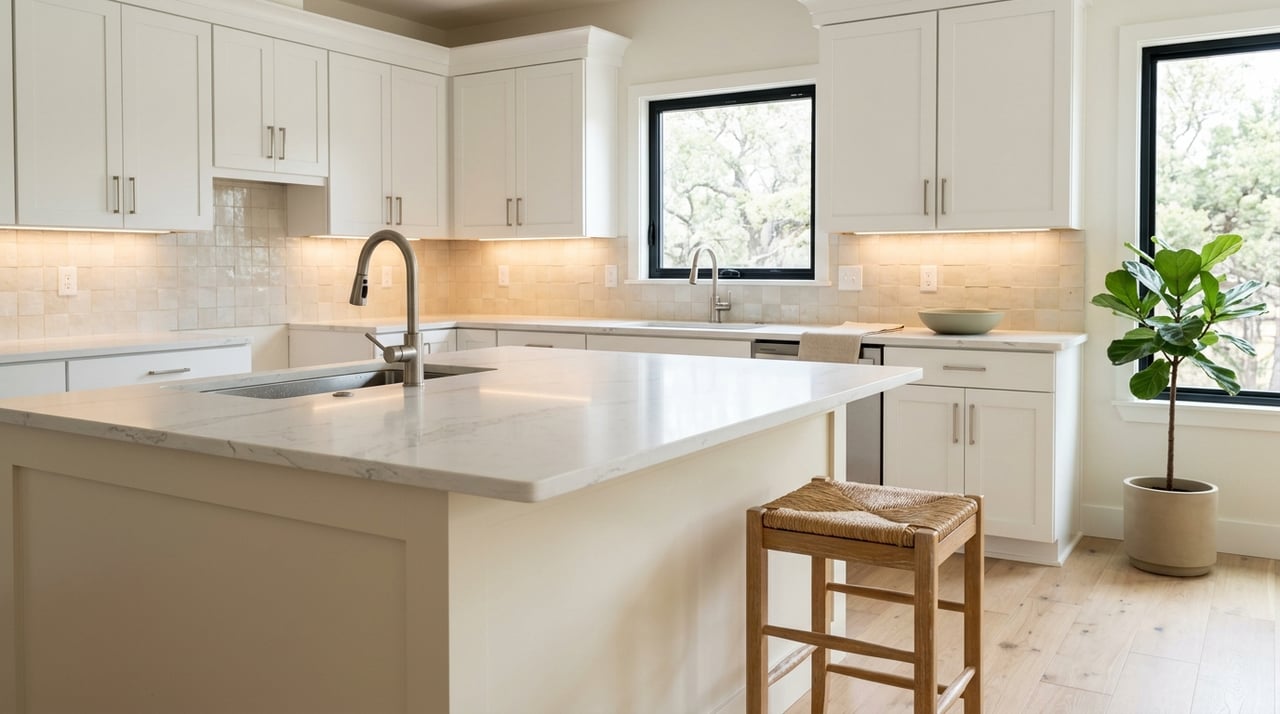
Buying New Construction In Liberty Hill With Confidence
June 18, 2026
June 18, 2026
Thinking about buying a brand-new home in Liberty Hill? It can feel exciting to pick a floor plan, finishes, and lot, but new construction also comes with contracts, timelines, and community details that work differently than a resale home. If you want to move forward with more clarity and less stress, this guide will walk you through what to watch, what to ask, and how to make a confident decision. Let’s dive in.
Liberty Hill is growing fast, and that growth shapes the new-construction experience. Census estimates place the city at 13,317 residents as of July 1, 2025, up from 11,984 in 2024 and 3,646 at the 2020 Census.
That kind of growth can create more choices for buyers, but it also means the area around your future home may continue to change. The city’s LHTX 2040 Comprehensive Plan is intended to guide future growth, development, and investment, which makes the broader location just as important as the house itself.
When you buy new construction, you are not just buying what is standing today. You are also buying into what may be built nearby over time.
Liberty Hill’s Future Land Use Map is used for rezoning considerations, and the city’s Growth Management Map is meant to guide development and infrastructure investments. In practical terms, that means nearby parcels, future roads, and planned services can affect your day-to-day experience later.
Before you move ahead, it helps to ask questions like:
One of the biggest mistakes buyers can make is assuming a builder contract works like a resale contract. In Texas, the standard resale contract is not for new homes being sold by a builder, and the Texas Real Estate Commission publishes separate forms for incomplete and completed new construction.
That matters because the contract structure affects your timeline, your rights during construction, and the notices you receive. A new-construction purchase needs careful review, especially when you are comparing allowances, upgrades, and completion terms.
If the home is not finished yet, the contract treats the signed plans, specifications, finish-out schedules, change orders, and allowances as the Construction Documents. These documents define what the builder is agreeing to deliver.
The form also requires the seller to build with due diligence. Written change orders are required, which helps create a paper trail if selections or scope change during the process.
If the home is already finished and has never been occupied, a different form applies. This version still includes important notices and community-related disclosures that can affect your long-term costs and expectations.
The completed-construction form includes notices for items such as mandatory HOA membership, statutory tax districts, certificated water or sewer service areas, public improvement districts, and transfer-fee issues. Those details can shape both affordability and ownership experience.
It is easy to assume the builder’s sales team will handle everything. While the builder’s team can explain the property and community, TREC states that its forms are intended primarily for licensed brokers or sales agents trained in their correct use, and that mistakes can lead to financial loss or an unenforceable contract.
That is a strong reason to have your own representation when buying new construction. Having someone in your corner can help you slow down, compare terms, and understand what is in writing before you sign.
Builder timelines can sound simple at first, but they should be treated as contract-based schedules, not open-ended promises. If you are planning a lease end, school-year move, sale of another home, or out-of-area relocation, this is especially important.
The TREC incomplete-construction form states a substantial-completion date. It also allows certain delays for acts of God, casualty, strikes, boycotts, or nonavailability of comparable materials.
The form also says the builder may substitute comparable materials. That means your final home may stay within the agreed standard without matching every original expectation exactly, so clear communication during the process matters.
Before you commit, ask for clarity on:
Some buyers assume a brand-new home does not need inspections. In reality, the Texas new-home form allows buyer access for inspections by inspectors selected by the buyer and licensed by TREC or otherwise permitted by law.
That gives you the opportunity to verify the home’s condition during the build process. Inspections can help you identify issues while access is still available and before closing is complete.
A practical approach is to ask early about builder policies for inspection access and scheduling. That helps you plan ahead instead of scrambling near the finish line.
New construction buyers often hear the word “warranty” and assume broad coverage. In practice, warranty protection is document-specific, so it is important to know exactly what is being offered and where it is stated.
The TREC completed-home form says the seller makes no other express warranties except those expressly set out in the contract, in a separate writing, or by law. It also requires assignment of assignable manufacturer warranties at closing.
That means your protection may come from multiple sources, and each source may cover different items. Review warranty documents alongside the contract so you know what is covered, what is excluded, and how claims are handled.
If a construction defect becomes a problem after closing, Texas Property Code Chapter 27 generally requires written notice to the contractor by certified mail at least 60 days before suit or arbitration. The contractor then gets an opportunity to inspect and make a settlement offer.
You do not need to memorize the law, but you do want to keep records. Save your contract, warranty papers, closing documents, and any communication related to repairs.
A beautiful floor plan is only part of the story. The way your lot faces can affect natural light, indoor comfort, and even how enjoyable your outdoor space feels.
The U.S. Department of Energy recommends looking at cardinal directions, not just the street view. South-facing windows bring in the most winter sunlight, north-facing windows give more even light, and east- and west-facing windows can create more glare and summer heat.
It also helps to think ahead. Future uses of land south of the lot can matter because trees or future buildings may block solar access over time.
As you compare lots, pay attention to:
The base price of a new home is only one part of affordability. A more realistic monthly estimate should include principal and interest, mortgage insurance if applicable, homeowners insurance, and property taxes.
The Consumer Financial Protection Bureau also notes that HOA dues are usually paid separately from the mortgage servicer. That means your real monthly housing cost may be higher than the mortgage payment alone suggests.
In Texas, there is no state property tax, so local taxing units set rates. In Williamson County, notices of appraised value are mailed in the spring and tax bills are sent after values are certified, typically in October.
Because of that, it is smart to use the county tax estimator and your lender’s Loan Estimate instead of guessing from the list price alone. This is especially important in new subdivisions, where the TREC form warns that certificated water or sewer service areas may come with special costs or charges and a period required to build lines or other facilities.
Before you finalize your budget, account for:
A brand-new home can come with brand-new obligations that do not show up in the photos. Community documents deserve the same attention as the floor plan and design center selections.
The completed-home contract reminds buyers that some communities have mandatory HOA membership, changing assessments, or special district charges. That is why the warranty conversation and the community-documents review should happen together, not as separate tasks.
When you understand both the home and the community structure, you can make a more complete decision about fit, cost, and long-term comfort.
Buying new construction in Liberty Hill can be a great move, especially if you want modern features, builder warranties, and the chance to choose a home in a fast-growing area. The key is to go in with a clear understanding of how new-home contracts, inspections, timelines, lot choice, and monthly costs really work.
When you ask better questions early, you give yourself more room to make a calm, informed decision. And in a market shaped by growth and ongoing development, that confidence matters.
If you’re exploring new construction in Liberty Hill and want steady, local guidance through the process, Oak & Willow Realty Group is here to help you move forward with clarity and confidence.
Stay up to date on the latest real estate trends.

Experience a real estate partnership built on trust, expertise, and genuine care. We bring a lifelong understanding of what “home” truly means to every client and every decision.
Oak & Willow Realty Group
Mary Ann: (512) 937-9063
Kara: (512) 818-8132
[email protected]
Address
4909 Williams Dr
Georgetown, TX 78633